Czechia has a generous collection of public holidays! Some are solemn, some historical, some deeply strange, and many involving potato salad. If you’re new here or simply trying to understand why the country shuts down on seemingly random days, here’s your guide to what’s being celebrated, why it matters, and what people actually do.
A word of warning before you go shopping
If you’re planning a grocery run on a Czech public holiday, think again. By law, any store larger than 200 square meters (that’s every major supermarket chain) must close on most public holidays. December 24th is a half-day, meaning the shelves will be stripped bare by panicking locals before noon. Small shops and petrol stations can stay open, so you’re not entirely on your own, but don’t count on your usual Tesco being there for you.
The good news: on Good Friday, Labor Day, Cyril and Methodius Day, Jan Hus Day, and November 17th major supermarkets stay open as normal.
1/1 leden – Den obnovy samostatného českého státu | January 1 – Day of the Restoration of the Independent Czech State

A day celebrating the birth of the Czech Republic in 1993… which sounds very important until you realize most people are still recovering from New Year’s Eve. While the country reflects on independence, you’remostly reflecting on your life choices from last night. Truly a day of renewal.
Velikonoce – Velký pátek | Easter – Good Friday
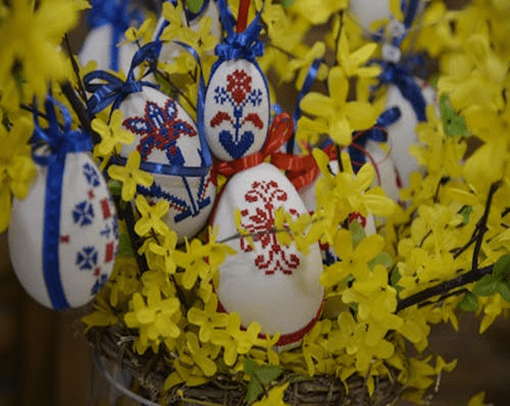
A solemn Christian holiday… which in Czech practice mostly means enjoying a free day and absolutely no one knowing what they’re supposed to do with it. It’s the calm before the storm of Easter Monday, when things get significantly weirder.
Velikonoční pondělí | Easter Monday
Easter Monday is where things get truly unique: men chase women with decorated whips and are rewarded with eggs and slivovitz — a tradition that would require considerable explanation to anyone from outside Central Europe. It’s festive, confusing, and somehow completely normal here.
1/5 květen – Svátek práce | May 1 – Labor Day

May Day, the international celebration of workers’ rights, which in Czech Republic is best celebrated by… not working. It’s also a day when couples traditionally kiss under a blossoming cherry tree, because nothing says solidarity with the working class like a romantic picnic.
8/5 květen – Den vítězství | May 8 – Victory Day
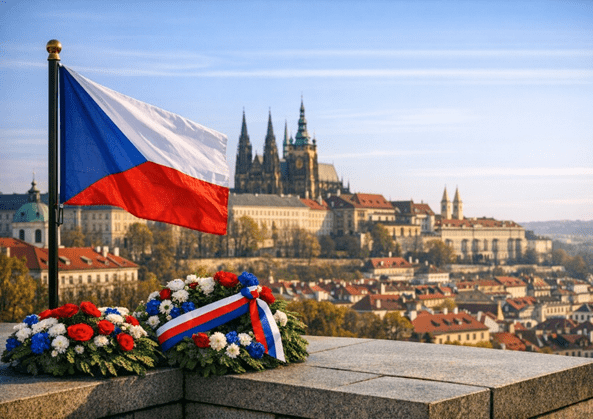
A day marking the end of World War II in Europe, commemorated in Czechia with quiet dignity and the collective joy of having another day off in spring. It’s the rare holiday where Czechs reflect on history, appreciate peace, and then immediately head outside because the weather is finally decent.
5/7 červenec – Den slovanských věrozvěstů Cyrila a Metoděje | July 5 – Day of the Slavic Apostles Cyril and Methodius
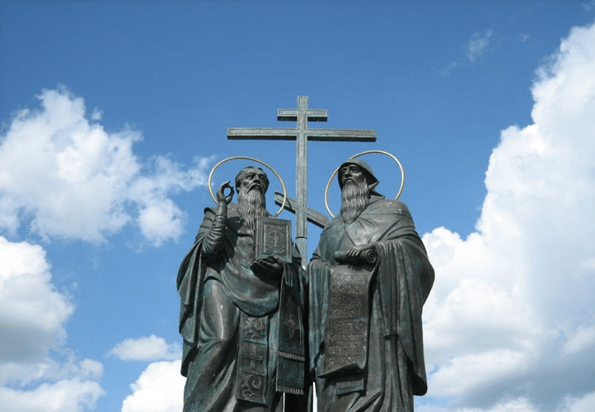
Two Byzantine monks who arrived in 863 AD, invented an entirely new alphabet, and translated the Bible into Old Slavonic — essentially doing more productive work in one trip than most people manage in a lifetime. It’s a holiday celebrating literacy and culture, which is a perfectly good reason to spend the day not reading anything at all.
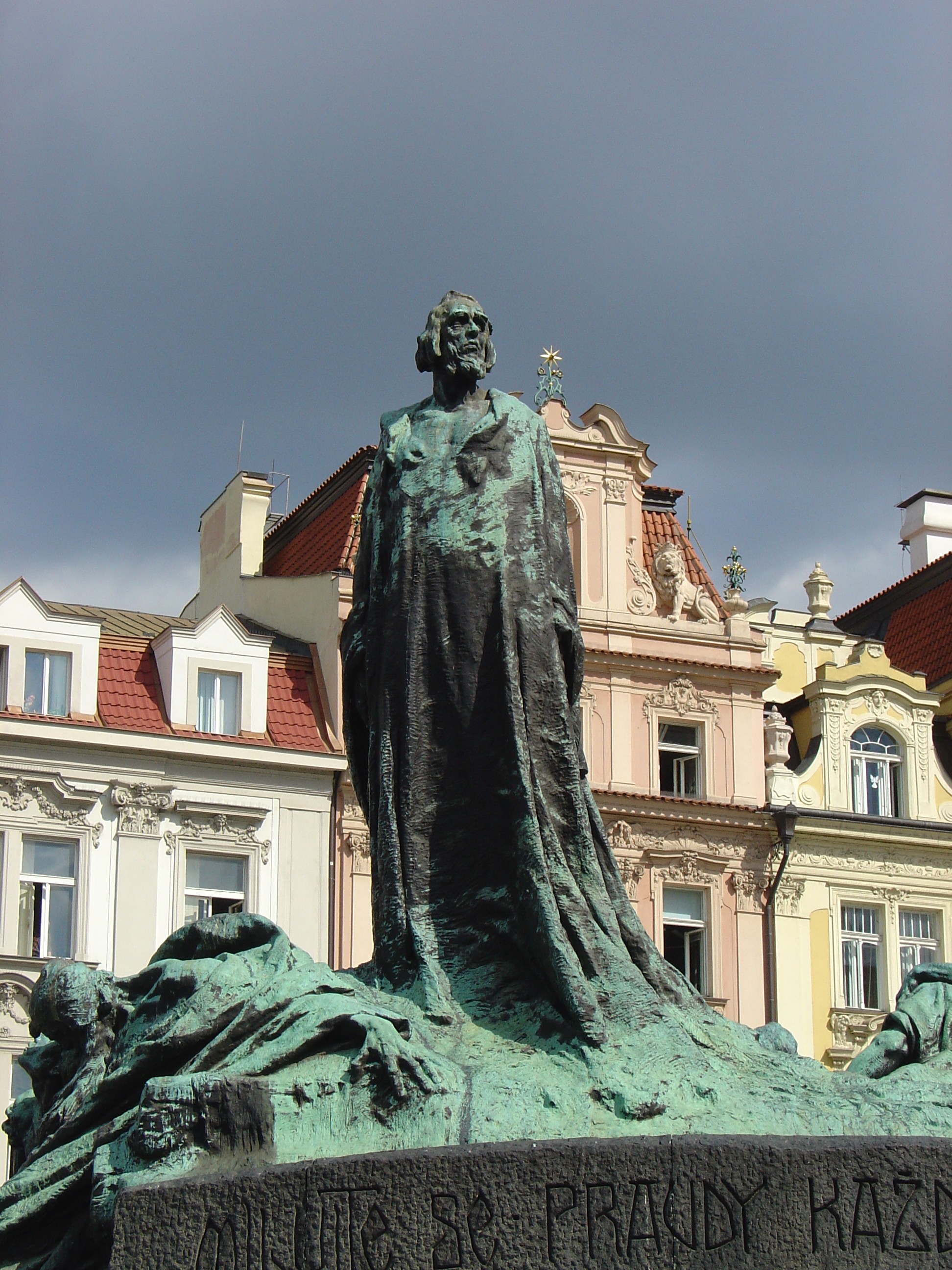
6/7 červenec – Den upálení mistra Jana Husa | July 6 – Day of the Burning of Master Jan Hus
Jan Hus was a Czech theologian who had the audacity to criticize the Catholic Church in the 15th century, so naturally they burned him at the stake — which is one way to end a theological debate. Czechs now commemorate his death with a public holiday, making him possibly the only person in history whose execution resulted in a permanent day off for an entire nation.
28/9 září – Den české státnosti | September 28 – Day of Czech Statehood
Czech Statehood Day commemorates St. Wenceslas — yes, the one from the Christmas carol — who became the patron saint of Bohemia after being murdered by his own brother in 935 AD, which is a remarkably dark origin story for a holiday. Czechs mark the occasion with a quiet sense of national pride, mostly by acknowledging that their state has been around for over a thousand years and has survived considerably worse than a Monday morning.
28/10 říjen – Den vzniku samostatného československého státu | October 28 – Day of the Establishment of the Independent Czechoslovak State
The big one! October 28, 1918, when Czechoslovakia declared independence from Austria‑Hungary and Tomáš Masaryk became the country’s first president, essentially by being the most competent person in the room. It’s the grown‑up Independence Day, the serious one with parades and speeches — as opposed to January 1st, which is the same idea but with a hangover.
17/11 listopad – Den boje za svobodu a demokracii | November 17 – Day of the Struggle for Freedom and Democracy November 17th pulls double duty: it marks both the 1939 Nazi crackdown on Czech students and the 1989 Velvet Revolution, when Czechs peacefully ended 40 years of communist rule by jingling their keys in Wenceslas Square — possibly the most polite revolution in history. It’s a day that proves Czechs have a remarkable talent for making world‑changing history without firing a single shot.
December 24 – Christmas Eve | prosinec – Štědrý den

The main day of Czech Christmas, celebrated with carp in the bathtub, potato salad diplomacy, and the annual tradition of pretending not to notice that “Ježíšek” brings the presents. It’s a cozy mix of fairy lights, mild chaos, and everyone trying very hard not to argue before dinner.
25/12 – 1. svátek vánoční | December 25 – Christmas Day
The official Christmas Day, meant for peace, joy, and spending time with family after the big night before. It’s essentially a national recovery day dressed up as a holiday, best spent eating leftovers, watching fairytales, and avoiding any topic that might start a family argument.
26/12 prosinec – 2. svátek vánoční | December 26 – Boxing Day
The second Christmas Day, because apparently one wasn’t enough to finish all the leftovers. At this point the potato salad has been on the table for two days, the family has run out of things to talk about, and everyone is just waiting for the whole thing to be over so they can start complaining about New Year’s Eve instead.
By the time you make it through the whole year, you start to notice a pattern: Czech public holidays are about history, tradition… and very strategically placed days off. Either way, now you know what’s going on, and more importantly, when to buy groceries.
Did you find this helpful? Share it with your friends!